
CPS
Intelligent Shift Planning for Blood Collection Workforce Operations
Business context and structural constraints
ARC's scheduling challenge had two layers. The first was prediction: how many staff are needed for a given drive, given historical yield data, site capacity, time of day, and seasonal donor patterns? The second was allocation: which available staff should be assigned, given certifications, proximity, existing schedules, and OJT requirements? Before CPS, both decisions were made manually by regional coordinators working from spreadsheets and local knowledge. The system couldn't scale, and it couldn't react quickly to cancellations or staffing gaps. A platform was needed that handled both the prediction and allocation problem at operational scale — with a UI simple enough that coordinators didn't need training to adopt it.
Multi-constraint optimization at operational scale
The allocation problem involves simultaneous optimization across demand prediction, certification requirements, OJT constraints, geographic assignment, and existing schedule load — for hundreds of staff and dozens of concurrent drives. A greedy allocation approach was implemented with configurable constraint weighting, producing near-optimal assignments in under 2 seconds for typical planning horizons.
Concurrent schedule editing without conflicts
Multiple coordinators may edit schedules simultaneously. Optimistic concurrency control at the assignment level prevents two coordinators from assigning the same staff member to conflicting drives without awareness of the conflict — surfacing the issue at save time with enough context to resolve it cleanly.
The Solution
Architectural approach and implementation
Blood collection drives depend on precisely matched staffing: too few phlebotomists means donors wait, daily quotas go unmet, and scheduled units go uncollected. Too many means wasted labor cost. At the American Red Cross — running thousands of drives annually across dozens of regions — getting this balance right at scale was a fundamentally unsolved operational problem before CPS. CPS is a shift planning platform that replaces manual scheduling with a data-driven allocation system. It ingests upcoming drive parameters — location, expected donor volume, duration, collection type — and generates staffing recommendations that match predicted demand to available personnel, factoring in certifications, existing assignments, and On-the-Job Training requirements. In production since 2024, CPS is used by operational coordinators across ARC's blood collection network to plan and adjust staffing in real time — replacing scheduling spreadsheets that couldn't react to changes and couldn't optimize across more than a handful of variables simultaneously.
How we turned the challenge into a solution
Each stage formalizes uncertainty into a concrete engineering outcome
Audit → Dependency Map
Inventory of 17+ disparate systems, data flow mapping, identification of critical integration points and performance bottlenecks
Map → Unified Architecture
Design of event-driven microservice architecture with multi-region data residency and zero-trust security model
Architecture → Working Prototype
Document management MVP with FIDO2 authentication, AES-256 encryption, and basic workflow engine for pilot group
Prototype → Scalable Platform
Horizontal scaling to 160+ countries, multi-tenant isolation, AI document classification with 95% accuracy
Platform → Analytics Core
MyInsights recommendation engine, predictive SLA alerts, personalized delivery of regulatory updates
Core → Continuous Compliance
Automated retention policies for 160+ jurisdictions, document integrity chain, one-click audit report generation
Demand-Driven Shift Allocation
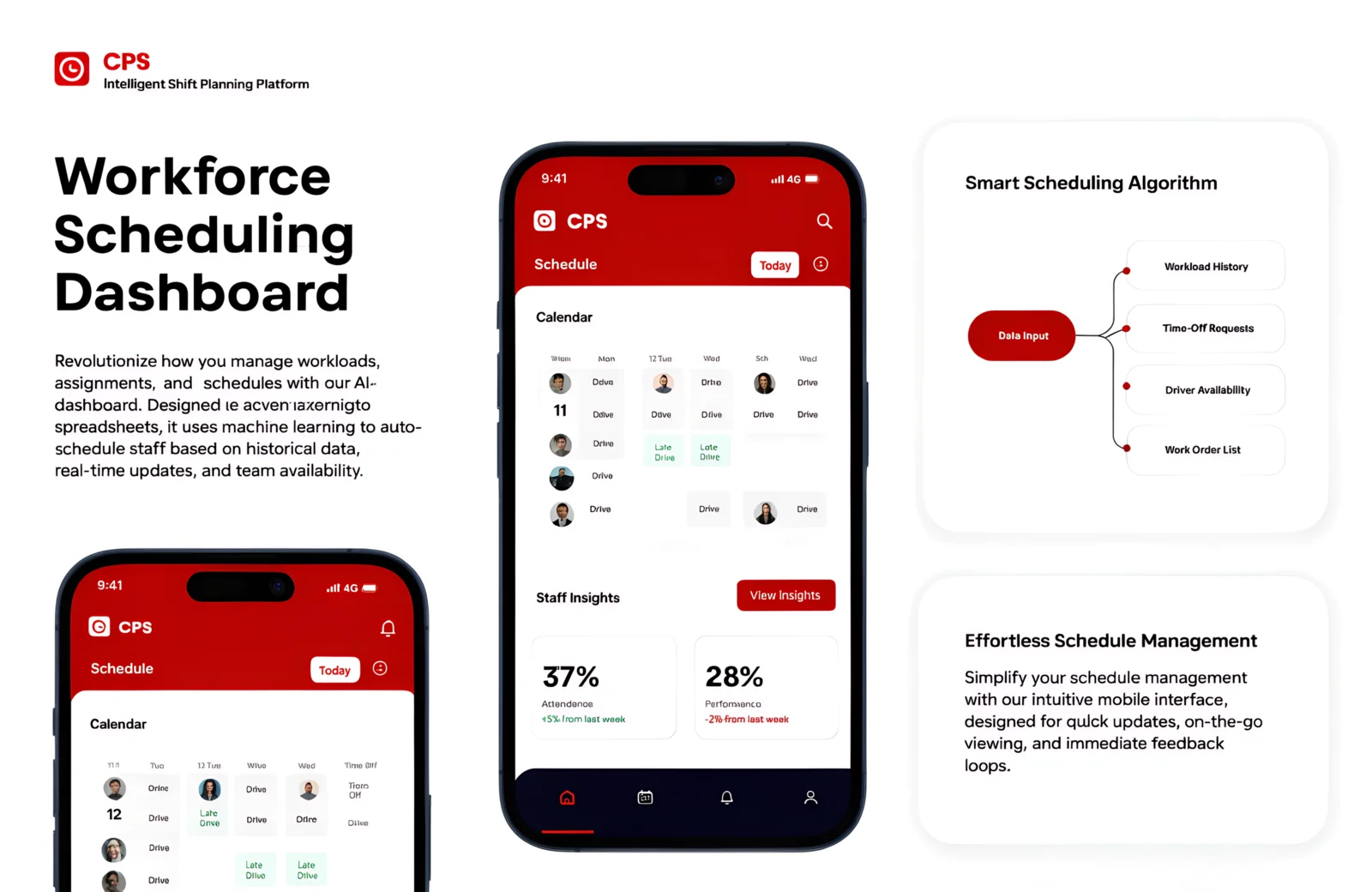
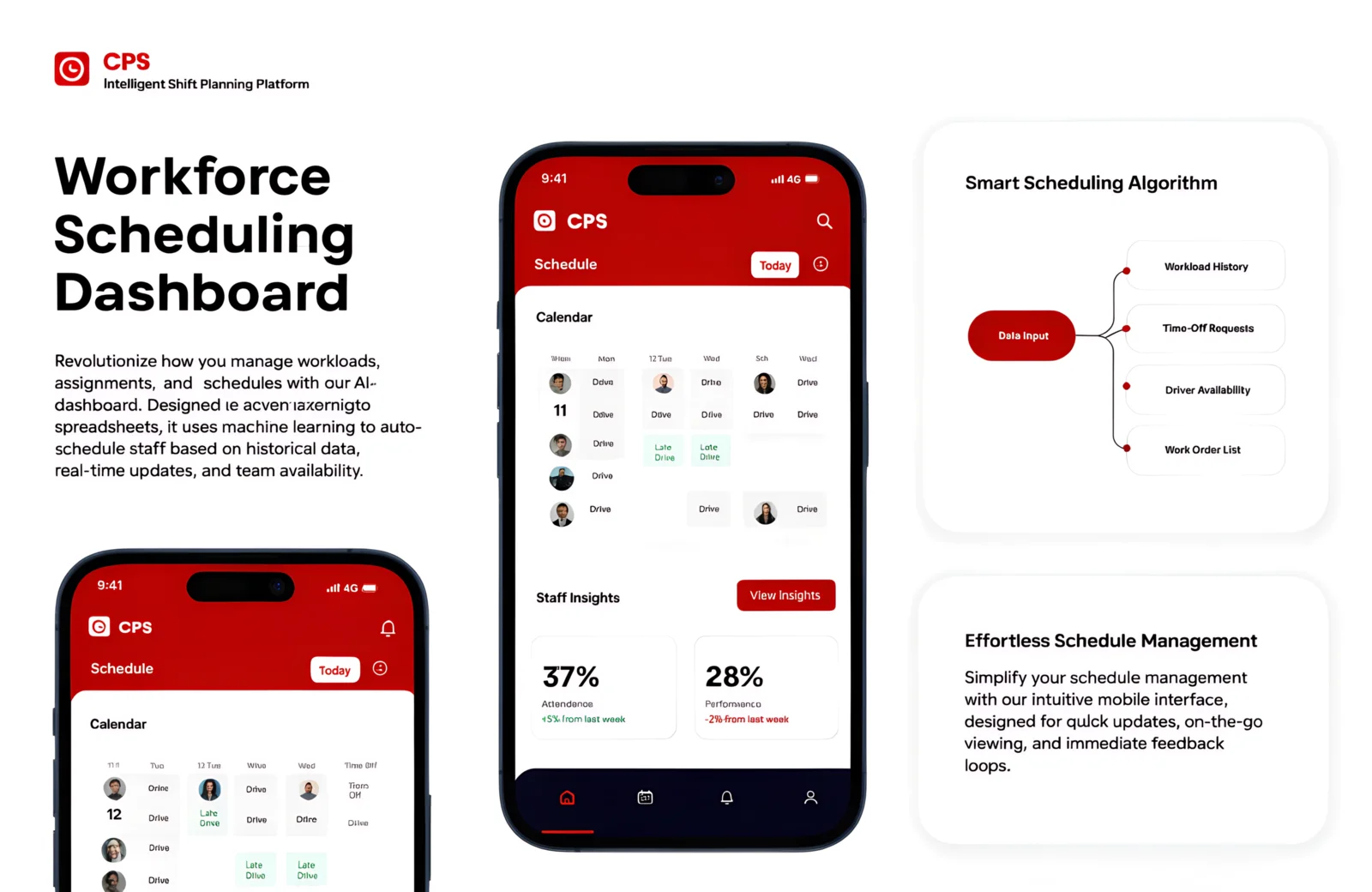
The allocation engine ingests drive parameters and generates staffing recommendations ranked by fit score — balancing demand coverage, certification match, geographic proximity, and existing schedule load. Coordinators review and confirm rather than build from scratch. The engine handles multi-constraint optimization across hundreds of staff and dozens of concurrent drives.
Real-Time Staffing Gap Analysis
The dashboard continuously evaluates current schedule state against predicted demand across all upcoming drives. Understaffed, overstaffed, and certification-gap scenarios are surfaced with severity indicators — coordinators see what needs attention without manually auditing every drive.
Conflict-Aware Scheduling Interface
Drag-and-drop shift assignment with inline conflict detection. Assigning a staff member to a drive that conflicts with their existing schedule, exceeds certification requirements, or violates OJT scheduling rules surfaces a contextual warning immediately — before the assignment is saved.
Integrated OJT Planning
On-the-Job Training requirements are treated as first-class scheduling constraints, not afterthoughts. Staff who need OJT on specific procedures are paired with certified supervisors in the allocation model — training gets scheduled as part of the operational plan, not in competition with it.
Weekly & Monthly Planning Views
Multi-horizon scheduling views let coordinators plan at different levels of granularity. Weekly view shows drive-level staffing status; monthly view surfaces capacity gaps and resource constraints at a planning level, enabling proactive recruitment or redeployment decisions before shortfalls become critical.
The Impact
Quantitative results demonstrating the real impact of implementation on operational efficiency, infrastructure reliability, and platform scalability
Scheduling accuracy improved by 40% — drive-level staffing matches predicted demand within defined tolerance on a consistent basis
Administrative workload reduced by 35% — coordinators spend less time building schedules and more time managing exceptions
Staffing gaps identified in advance — real-time analysis surfaces understaffed and overstaffed scenarios before drives occur, not during
OJT scheduling integrated — training requirements no longer compete with operational staffing; they're planned alongside it
Multi-constraint allocation recommendations generated in under 2 seconds across all upcoming drives
Technology Stack
Built with proven enterprise-grade technologies
Visual Journey
Screenshots and mockups from the project
Interested in a similar solution?
Discuss your project→